
What Makes a Corporate Event Venue Worth Booking
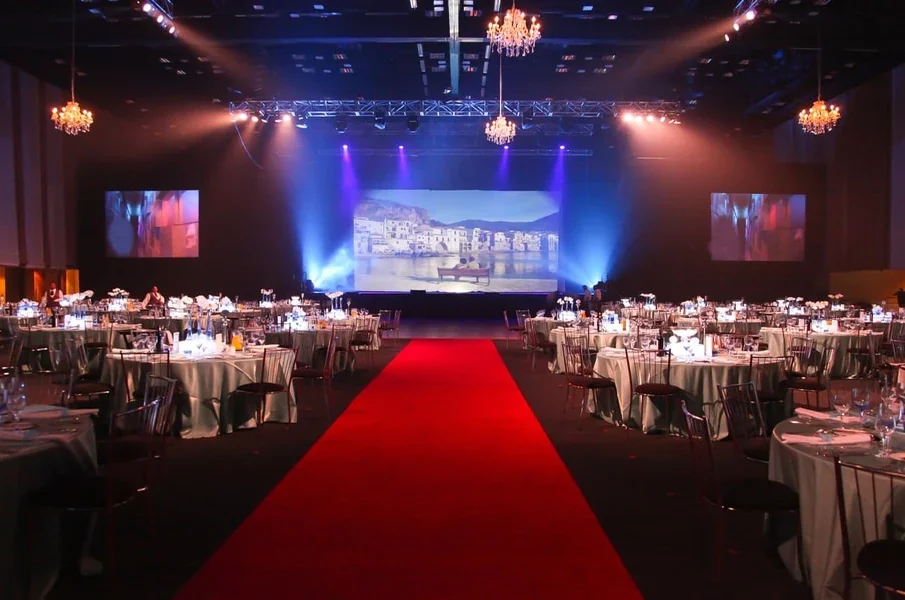
Most venue tours feel the same. A coordinator walks you through high ceilings and a rooftop view, hands you a laminated capacity sheet, and quotes a number that makes you blink. Then you sign anyway, because the place looked nice on Instagram. Two months later, you’re scrambling because the freight elevator is too small for the AV rig and the kitchen can’t handle plated service for 300.
Venue selection is the decision that every other event decision orbits. Get it right, and the rest of the planning falls into place. Get it wrong, and no amount of great food or clever lighting fixes it. So before you book the next space that photographs well, run it through these five criteria. They’re the difference between a venue that seems great and one that actually performs.
Why This Decision Has Higher Stakes Than It Used To
The event planning profession is growing fast, and so is the competition for the best spaces. According to the U.S. Bureau of Labor Statistics’Occupational Outlook Handbook, employment of meeting, convention, and event planners is projected to grow 5 percent from 2024 to 2034, faster than the average for all occupations. More planners in the market means more competition for the venues that actually deliver – and more pressure on hosts to evaluate spaces critically rather than emotionally.
The stakes are financial, too. Grand View Research reported that the U.S. event management market size was $285.18 billion in 2024. Businesses are spending serious money on corporate gatherings. A venue that undercuts that investment – through poor logistics, bad acoustics, or a catering kitchen that’s an afterthought – wastes far more than the rental fee.
The V.E.N.U.E. Framework for Smarter Evaluation
Here’s a framework developed from patterns that show up across failed and successful corporate events. It’s called V.E.N.U.E., and each letter targets a failure point that tour-day excitement tends to hide.
| Letter | Stands For | What to Ask |
|---|---|---|
| V | Vendor Flexibility | Can you bring your own caterer, AV team, and florist – or is the in-house list mandatory? |
| E | Entry and Load-In | How do vendors access the space before doors open? Is there a freight entrance? |
| N | Noise and Acoustics | What’s the ambient sound profile at capacity? Does sound bleed from adjacent events? |
| U | Unique Access Points | Does the space offer something competitors can’t replicate – views, water access, proximity? |
| E | Exit Strategy | What happens if attendance spikes, the weather turns, or the night runs long? |
Walk into every site visit with this table in your back pocket. Ask each question out loud. The answers tell you more than any brochure.
Vendor Flexibility Is the One You Can’t Compromise On
Mandatory in-house catering and AV packages are where corporate event budgets quietly collapse. The venue charges market rate for their catering partner. You pay it. The food is fine. But “fine” is not what you promised the CEO who’s presenting your brand to 200 clients.
Venues that allow you to bring your own culinary team give you creative control that no forced package can match. Think about the difference between a generic buffet and a chef-designed tasting experience where every hors d’oeuvre connects to your brand story. That difference lives entirely in vendor flexibility.
“The venue is the stage, but the food is the performance. You need to own both.”
– A widely shared sentiment among corporate event producers, reflected consistently in planner community discussions and industry roundtables on event design.
When vetting a space, ask specifically: Is your catering list exclusive? Can outside vendors use your kitchen? What’s the buyout fee for going off-list? A venue confident in its offering won’t punish you for asking.
Location Logic: Why Miami Keeps Winning Corporate Event Business
Geography matters more than most planners admit. A venue in a city that guests actually want to visit generates attendance lift before you send a single reminder email. Miami is the clearest example of this effect. Miami-Dade County attracted over 28 million visitors in 2024, the highest number ever recorded in a single year, with those visitors spending $22 billion in the destination and generating $2.2 billion in local and state tax revenues, according to a June 2025 report from the Greater Miami Convention and Visitors Bureau.
That volume of visitor traffic means direct flight access from nearly every major U.S. market, a hotel infrastructure that handles surge capacity, and a city brand strong enough to make attendance feel like a reward rather than an obligation. Hosting a corporate gala or product launch in a city people genuinely want to visit is a retention and attendance strategy in itself.
Within Miami, the downtown waterfront corridor has become particularly competitive because it stacks location advantages: proximity to business districts, marina access for private arrivals, and skyline views that replace the need for a heavy décor budget. When a client is scoping out an event venue in Miami, FL with waterfront access, they’re not just booking square footage – they’re buying a setting that does half the event design work before the first guest arrives.
The Logistics Test Most Planners Skip
The most overlooked part of venue selection is what happens between midnight and 6 a.m. the day of your event. Equipment arrives. The band needs to run a sound check. The kitchen team needs four hours of prep time. And somewhere in there, the venue coordinator hands you a list of things you weren’t told during the tour.
Here’s the scenario that separates a prepared planner from a panicked one: You’ve booked a penthouse-level event space. The caterer’s van arrives at 7 a.m. with 15 cases of glassware, a full kitchen kit, and three large floral installations. The elevator is residential-sized and shared with hotel guests. The freight entrance is on a different street, accessible only with a dock key the coordinator forgot to mention.
You avoid that scenario by asking four specific questions before you sign anything:
- What’s the earliest vendor load-in time, and who provides access?
- Is there a dedicated freight or service entrance separate from guest arrival?
- What’s the noise curfew, and are there neighboring events that same night?
- What’s the policy if the event runs past the contracted end time?
A venue that answers all four crisply – without hedging or redirecting – has handled real events before. One that fumbles them probably hasn’t handled one quite like yours.
The “Unique Access Point” Factor
Every checklist item above can be satisfied by dozens of spaces in any major city. The differentiator is what the venue offers that physically cannot be replicated elsewhere. This is where the “U” in the V.E.N.U.E. framework earns its place.
Water access is one of the rarest and most valuable of these differentiators. A space with a deep-water marina lets guests arrive by private yacht. That single detail reshapes the guest experience before they’ve touched a canape. Panoramic views of a city skyline at night carry the same logic: they create moments guests photograph and remember without you spending a dollar on a photo activation.
When you’re evaluating venues, ask yourself: what would a guest say about this place to someone who wasn’t there? If the honest answer is “it was a nice room,” keep looking. The venue worth booking gives guests a story to tell.
A Final Word on Price Versus Value
The right venue is almost never the cheapest one. But it’s also rarely the most expensive. It’s the one where the logistics work, the location earns its price, the vendor policy gives you control, and the setting does work your budget can’t replicate from scratch.
Run the V.E.N.U.E. framework before your next site visit. Ask every question out loud. Push past the brochure answers. The venue that holds up under that scrutiny is the one worth writing the check for.